


Banking & Finance
September 2026
New Wealth, Old Rules: Why First-Generation Fortunes Are Choosing the UAE
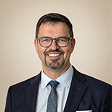
By Igors Jakovlevs, Managing Partner of MDL Advisers and Senior Partner of Emirald Legal Consultants. Part one of a weekly series on preserving, structuring and passing on first-generation wealth.
My own companies date back to 1989, and my consulting work to 2006. For more than twenty years there has also been close cooperation with Swiss and European private banks, and for the past eleven all of this has been based in Dubai. The path of a first-generation entrepreneur is familiar to me from experience, not from theory.
Over these years one pattern has become clear: wealthy families come to the Emirates from two very different worlds.

Two worlds of wealth
Established wealth from Western Europe and North America usually arrives with an infrastructure built over generations: family offices, law firms that advised the founder’s grandfather, structures set up decades ago and a conservative approach to almost everything. For these families, a move to the UAE is mostly a matter of fine-tuning.
First-generation wealth is built differently. Entrepreneurs who created their fortunes over the past twenty or thirty years in the CIS, Eastern Europe, Africa, Asia or Latin America rarely had the luxury of structuring step by step. They built companies, opened markets and sometimes created entire industries at the same time, often amid economic and regulatory turbulence.
There was rarely time to build a proper structure around the wealth, and trusted advisers were few. As a result, in many first-generation families the capital is still tied almost entirely to one person: the founder.
This series is written for them. Not because established families matter less, but because for new wealth the stakes are higher and the cost of a structural mistake is far greater.
The founder’s three tasks
In countries where institutions are still maturing, private capital is too often seen as a resource rather than a partner. Rules can change quickly, and a successful name can attract attention that has little to do with the business itself.
For a first-generation family, three tasks therefore come before everything else:
- Protect what has been built from shocks tied to a single jurisdiction.
- Separate the wealth from the founder’s day-to-day involvement, so that it does not depend on one person’s signature.
- Pass on to the next generation not only the assets, but also the rules and culture of managing them, without disputes or frozen accounts.
All three start with transparency. The UAE participates in the automatic exchange of financial information (CRS) and applies strict compliance and anti-money-laundering standards. For wealth that was earned honestly and can be documented, this is not an obstacle but an advantage: it places the family in a jurisdiction with a strong international reputation.
Why the UAE
The UAE has no personal income tax, no tax on capital gains, no inheritance tax and no wealth tax for individuals. Companies pay 9% corporate tax above a threshold, and VAT is 5%.
For families whose wealth grew in less predictable environments, predictability matters as much as the rates: clear rules, a government that openly competes for investors, and the financial centres of DIFC and ADGM with their own common law courts.
Two more facts matter to anyone who has lived through currency reforms and banking crises. The dirham has been held at the same rate against the US dollar since 1980 and has never been devalued. And when banks came under pressure, the state stepped in: in October 2008, at the height of the global financial crisis, the UAE government guaranteed deposits in all national banks and major foreign banks in the country for three years, and in May 2011 the Government of Dubai took control of the troubled Dubai Bank, stating that it was doing so to protect depositors’ interests.
Personal security completes the picture. Abu Dhabi was named the world’s safest city for the tenth year running in Numbeo’s 2026 index, and Dubai ranks among the global leaders. For families used to security details, this changes daily life more than any tax rate.
Capital votes with purchases, not statements
Precise figures on how many wealthy people move between countries are hard to come by, and the most widely quoted estimates have been seriously challenged. Verifiable transaction data is a far better guide.
According to Knight Frank, Dubai recorded 296 home sales above $10 million in the first half of 2026, worth $5.1 billion. That is 16% more transactions than a year earlier and 49% more than in the first half of 2024. Just as telling, only 4% of homes sold last year were resold within twelve months, compared with 25% during the 2008 boom. Families are not trading property here. They are building a base.
This year the region also went through a serious stress test, and the UAE came through it. Air traffic recovered quickly: in July and August Emirates operated at 93% of its pre-war capacity, and the prime property market set new records over the same period. For capital, that kind of resilience says more than any brochure.
The right structure from day one
Many entrepreneurs arrive with a company already in mind, often based on a quick recommendation. Quite often it is not the right one. Mainland or free zone, operating company or pure holding, which licensing authority: these decisions shape banking access, the corporate tax position and succession for years to come.
Our group covers this in-house, with each company holding its own licence:
- MDL Advisers is a licensed corporate service provider. It helps determine the most efficient legal form and location for the client’s goals and sets up the operating companies. As a licensed accounting firm with in-house accountants, it then maintains the books and handles corporate tax, VAT and annual reporting.
- Emirald Legal Consultants is a licensed registered agent with RAK ICC for family foundations and holding companies, and prepares DIFC Wills.
When structure, accounting and legal governance sit with one team, the gaps that usually appear between separate providers disappear. This matters, because service quality in the UAE is not uniform: for the same fee you can get an excellent result or an expensive lesson. Our team works in Arabic, English, Filipino (Tagalog), Malayalam, Portuguese, Russian and Spanish, so nothing is lost in translation with clients, authorities or banks.
Banking: never one basket
Significant wealth should never sit in one country or with one bank. Two decades of work with leading private banks in Switzerland, Liechtenstein and other international financial centres show that cross-border wealth needs several layers:
- an operating and holding base in the UAE;
- accounts for long-term preservation in established private banking jurisdictions;
- a well-prepared client file, so that onboarding takes weeks rather than months of back-and-forth.
Succession: the founder’s biggest vulnerability
For first-generation wealth, the greatest risk is rarely the market. It is the transition. When a business was built on the founder’s personal relationships and decisions, much of the knowledge exists only in his or her head.
Without proper planning, bank accounts in the founder’s name can be frozen after death, and a company where the founder is the sole shareholder or signatory can effectively stall while heirs go through court procedures they never chose.
Two instruments address this:
DIFC Wills. Available to non-Muslims and governed by DIFC law, which is based on English common law, a DIFC Will lets the founder decide who inherits UAE assets and who becomes guardian of minor children. Emirald Legal Consultants has two accredited DIFC Wills draftsmen on the team.
RAK ICC family foundations. A foundation holds assets, operating subsidiaries and holdings under one charter, separates family ownership from operational risk and keeps ownership confidential. Its charter can also set out how the next generation is educated, involved and gradually entrusted with responsibility.
Building a fortune may take one generation. Keeping it for three takes a system.
Plan B, and Plan C
For many families, the UAE was once their Plan B. Today, prudent families are building a Plan C as well. Having built a life and a business in a new country four times, I know that a move goes far more smoothly when the structure and documents are ready in advance.
A sound Plan C usually includes:
- an alternative residence or citizenship that keeps the family mobile;
- liquidity held outside the main country of residence;
- a holding or foundation structure that keeps working even if the family has to change its base.
Advisers see this in their own client data: Henley & Partners recorded a 41% rise in enquiries from UAE-based individuals between Q4 2025 and Q1 2026, while applications for alternative residence or citizenship grew by 29%. This is not departure but diversification: people stay, while adding options.
A coordinated approach
There is no template for private wealth. Every business, family and set of assets needs its own solution. From choosing the structure and banking partners to accounting, family foundations and succession, MDL Advisers and Emirald Legal Consultants can support the whole process under one roof, discreetly and in the client’s language.
Next week in this series
Part two: three banking compliance blind spots that delay corporate account opening in the UAE for months, and how to avoid them.
Free checklist
Want “The First-Generation Family Wealth Checklist: 10 Critical Governance and Succession Vulnerabilities in the UAE”? Write to us at info@advisers.ae and we’ll send it to you free of charge.
About the author
Igors Jakovlevs is Managing Partner of MDL Advisers and Senior Partner and Co-Founder of Emirald Legal Consultants.
He has run his own companies since 1989, which means he has built businesses through several economic cycles, currency crises and changes of regulatory regime. Since 2006 he has led consulting firms advising entrepreneurs on company structuring, cross-border operations and asset protection.
In the early 2000s he spent five years working at a European bank’s representative office in Russia. For more than twenty years he has worked as an introducer to leading private banks in Switzerland, Liechtenstein and other international financial centres, helping families find the right institution for their capital.
Before the UAE, he lived and did business in Latvia, Russia and Ukraine. The Emirates became the fourth country in which he has built both a life and a company.
Based in Dubai for eleven years, he founded MDL Advisers in 2015 and later co-founded Emirald Legal Consultants, focused on DIFC Wills, family foundations and succession planning. He works with clients from the CIS, Europe, the Middle East, Africa and Latin America.
MDL Advisers | Emirald Legal Consultants | advisers.ae | info@advisers.ae | LinkedIn | +971 55 1806524


